Advocacy Update from Arizona Food Bank Network
February 27, 2026. The Inside Scoop is a monthly Hunger Advocacy newsletter by Jessica Herbert of the Arizona Food Bank Network. Ms. Herbert addressed our group at Lutheran Day at the Legislature.
2026 Legislative Update
In thirty-nine days, we went from the start of session to five bills that would restrict access to SNAP vetoed by Governor Hobbs. Included in that time were two federal holidays and only twenty-seven business days, so we’re going to map out how our tracking list went from thirteen high-priority bills down to five in record time.
The biggest shift we’ve seen this session is the use of “mirror bills” to expedite the legislative process. We’ll be outlining what that looks like below (and dig-in with our March webinar), but unlike most sessions, there was a record-breaking number of bills introduced this year. With more than 2,100 bills introduced, the Legislature had to create a brand new numbering system for House and Senate bills!
In total, AzFBN had twenty-three bills on our tracking list that would impact access to nutrition assistance programs—for better and worse. This is a significant uptick from just a few years ago; in 2024, we were primarily concerned with only two bills that would impact SNAP. Like the shifts we’ve seen on a federal level, the attacks on SNAP have only amplified.
What is a “Mirror Bill”?
Great question! While their most common alias is “mirror bill,” the process itself is actually called a “Substitution of Bills” which is:
“[a] shortcut to enactment in which two identical bills are considered by both houses. Then in Committee of the Whole of one of the houses, the bill that has passed the other house is substituted for the identical bill under consideration on the floor and, assuming it passes, thereby avoids having to go through the committees and caucuses of the second house that had already considered the original identical bill.”
Looking for that definition? You won’t find it in the Abbreviations (2016), Bill Process (1977), or Bill to Law (2000) guides on the azleg.gov website, but if you dig a little further, you can find the explanation in the Legislative Manual (2003). According to our friends in-the-know, it’s a pretty unique process in Arizona, but it’s not new.
How Does this Legislative Process Work?
Another great question and, in total honesty, this author had no idea the answer just a few weeks ago! I say this because transparency is important and when we see shifts in legislative tactics, it’s extra important for all of us to understand them thoroughly.
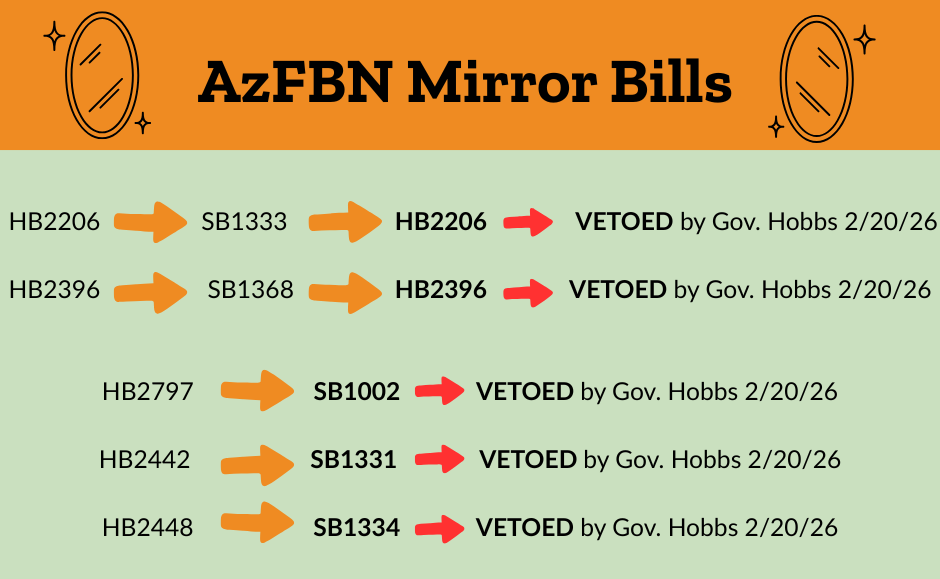
The legislative process for mirror bills starts the same as your average bill, as you can tell by its definition, but the timeline is expedited to say the least. We saw that firsthand this session, when legislators utilize the mirror bill process, it eliminates the opportunity for community members and advocates to voice public opinion during hearings. This is important for a few reasons, but one of the most important being there is a public record of action and recommendations. So, while the bills in the above image went through substitutions on the Floor, each bill was only heard in one chamber’s committees.
We’ll be hosting our next Food Policy webinar on March 12, 2026, where we will cover the legislative session connection to H.R. 1, as well as a more in-depth explanation of the mirror bill process and other legislative tactics. A link to register can be found here, and we will include a recording of the call in the next issue of The Inside Scoop.
AzFBN Bill Status
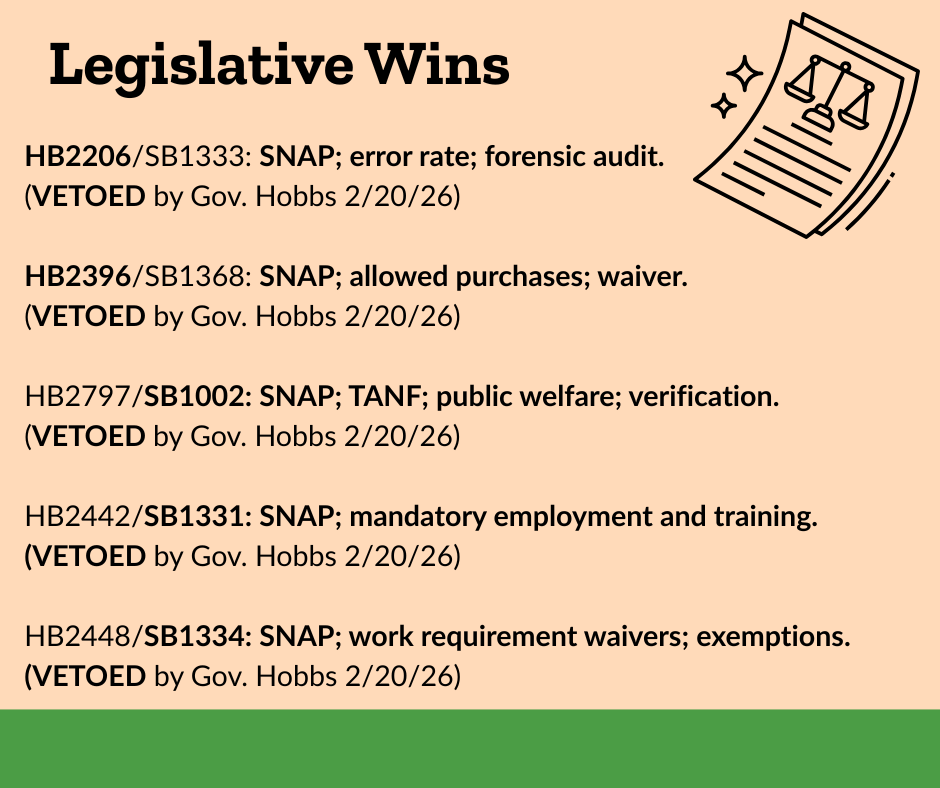
With Governor Hobbs vetoing the SNAP bills above and the deadline passing for new bills to be submitted, we’re closely monitoring for “Strike Everything” amendments. Outside of that, the road has come to an end for a significant portion of the bills AzFBN was monitoring or opposing. We want to thank our lobbyists, Mark and Emma, as well as our incredible partners at the Arizona Center for Economic Progress, Wildfire AZ, and the William E. Morris Institute for Justice for their collaboration and support! You can view our joint veto request letters here.
You might notice this bill list looks a lot like last year’s, and you’d be correct! We saw four bills return in 2026 and a few new bills that were different variations of bills we’ve seen submitted in other states. Most of these bills are brought to lawmakers from out-of-state think tanks. As Governor Hobbs specifically outlined in her reasoning for the vetoes, the state of Arizona and DES need to focus on conforming to the changes in access and eligibility created by federal legislation this summer. Considering none of the bills outlined above included additional appropriations for the administrative hurdles they mandated, they would place even more pressure on an agency already implementing changes to decrease our state error rate for SNAP.
You can view Governor Hobb’s veto response letters here.
Good News! School Meals Bill Passed House Appropriations Committee
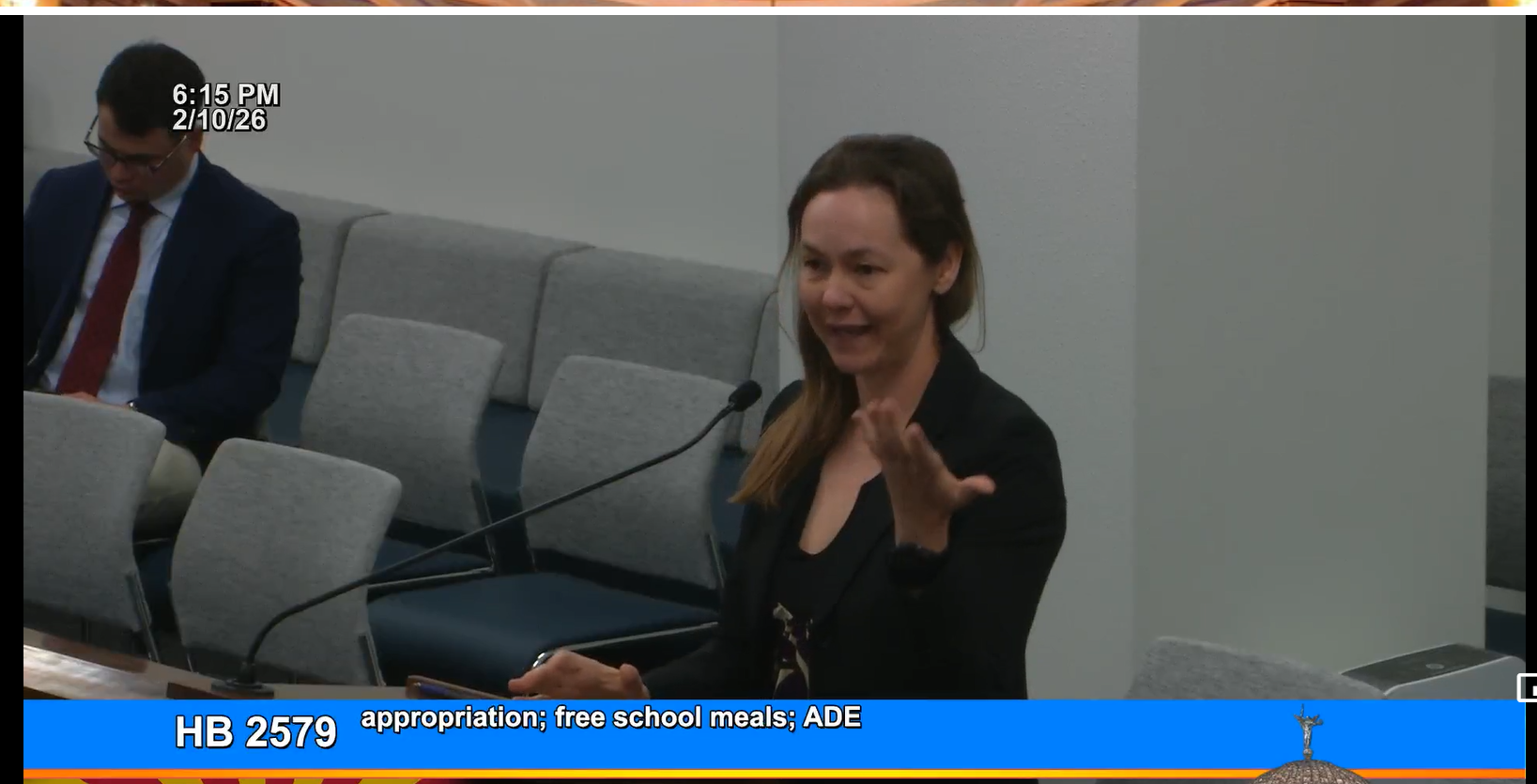
HB2579 makes the Reduced Price co-pays for school meals (70 cents a day for breakfast and lunch) an ongoing appropriation of $1.6 million, which means funding for a portion of school meals gets incorporated into the state’s budget each year. This is a BIG DEAL and has taken years of work by many partners to get to this point!
The bill made it out of the House Education Committee on February 10, with a 10-2 vote, and sailed through the House Appropriations Committee the next day (with overwhelming bipartisan support!) in a 15-3 vote. HB2579 continued its sprint, passing the House Rules committee on February 23 with full support of members present, and then cruising through both caucuses on February 24, 2026.
Take action: Contact your state representatives and let them know that funding for reduced price school meals is crucial and you support HB2579.
A huge congratulations to School Nutrition Association of AZ and School Nutrition Association Group for this win. Thank you for all your hard work this session in keeping this ask top of mind! While state funding to cover Reduced Price copays for families has been in place since 2024, HB2579 is continuing momentum to make this an ongoing line item in the state budget. But the fight isn’t over -- our state representatives need to hear from their constituents about why prioritizing meals for Arizona’s children is a top priority.