Moving from Concern to Action in Houses of Worship
Many of us are hearing deep concern in our congregations, ministries and neighborhoods. People are asking hard questions about what is happening in our communities, what faithful public witness looks like, and how people of faith can respond with courage, compassion and clarity.
A new video featuring the Rev. Amy Reumann, Senior Director of ELCA Witness in Society, offers a helpful starting place for those conversations.
The video, “Organizing in Houses of Worship — A Christian Perspective with Rev. Amy Reumann,” is part of Interfaith Alliance’s “Train Up for Faithful Practices” series. It explores how congregations can move from concern to action by building relationships, developing leaders and creating a faith-rooted organizing culture inside houses of worship.
Pastor Reumann names what many of us are experiencing: people in congregations are seeing needs and injustices around them and asking, “What do I do?” The video helps answer that question by reminding us that faithful action begins not with headlines, but with local relationships. It grows through listening, accompaniment, coalition-building, hospitality and a clear grounding in our theological tradition.
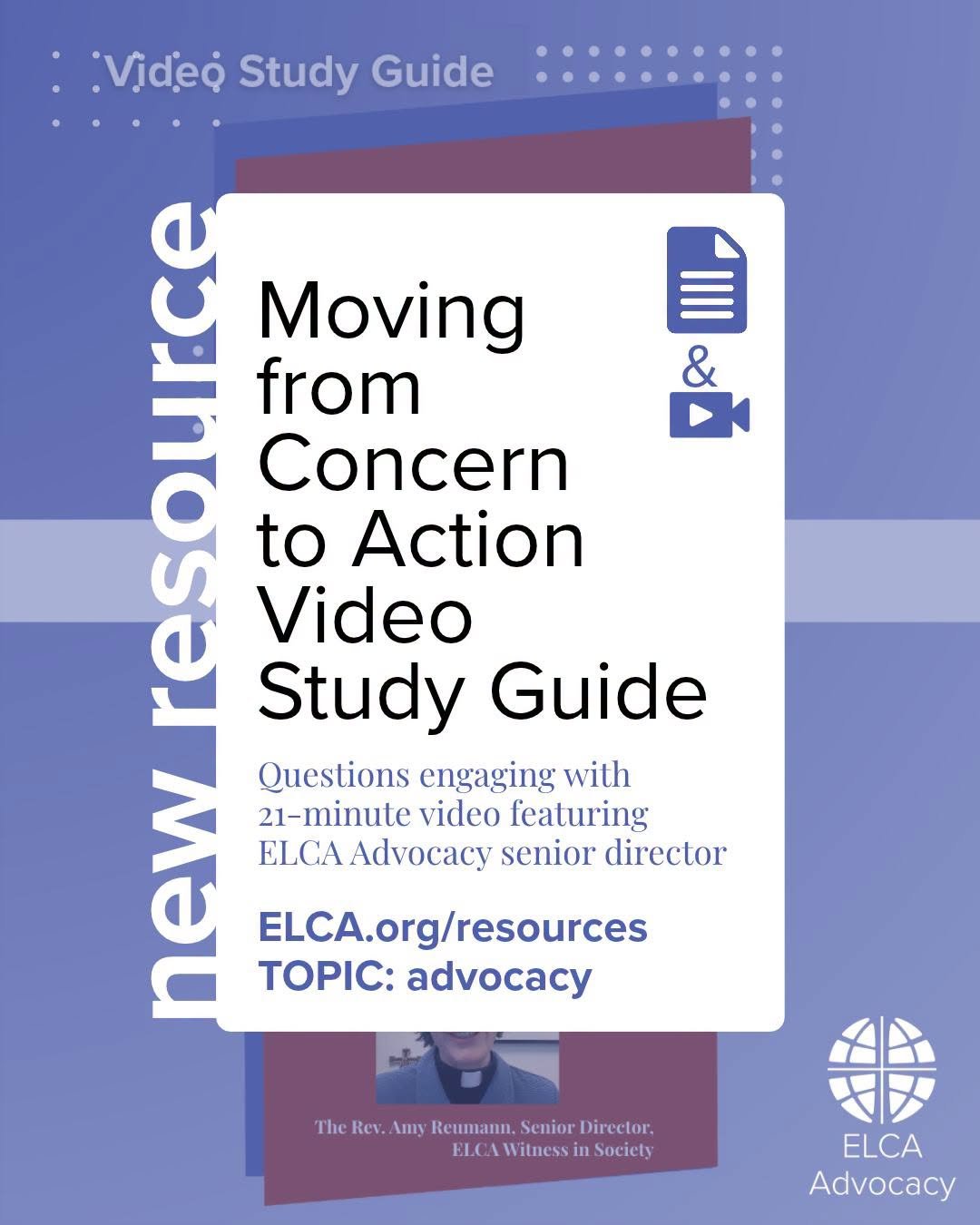
The accompanying study guide invites congregations and small groups to watch all or part of the 21-minute video and then reflect together. Discussion questions ask participants to consider what they are hearing from their communities, how concern might lead to conversation and action, and how being freed by God’s grace shapes the way we engage questions of justice, compassion and the common good.
The guide also highlights four roles for the church in public life: being a disturbing presence, a serving presence, a reconciling presence and a deliberating presence. These roles can help congregations think honestly about where they are already strong and where God may be calling them to grow.
This resource is especially useful for congregations wondering how to begin. Faith-based organizing does not require every church to become an expert overnight. It asks us to start as hosts, start as neighbors, seek training and learn from those already showing up for the community.
LAMA encourages congregations, ministry teams and advocacy groups to use this video and study guide as a conversation starter. Watch it with a council, adult forum, justice team, youth group or community partner. Ask what concerns are rising in your neighborhood. Listen for who is already doing the work. Consider what faithful next step your congregation might take.
Many energized Lutherans are discovering the power of public witness—how it clarifies our values, expands our understanding of God and helps us see what the church is called to be. —Pastor Reumann from the study guide,
That is the invitation before us: to move from concern to action, rooted in grace, guided by love of neighbor and committed to the common good.
The study guide also highlights four roles for the church in public life: being a disturbing presence, a serving presence, a reconciling presence and a deliberating presence.
A disturbing presence means the church is willing to name harm, injustice and suffering that others may prefer to ignore. This is the prophetic role of public witness: asking uncomfortable questions, standing with vulnerable neighbors and refusing to accept “the way things are” as the way things must be.
A serving presence means the church responds concretely to human need. Congregations do this when they feed people, accompany migrants, support families, shelter neighbors, care for creation and show up in practical ways for the community.
A reconciling presence means the church helps repair relationships and bridge divisions without pretending that injustice does not exist. This role invites listening, truth-telling, confession, forgiveness and the patient work of rebuilding trust across difference.
A deliberating presence means the church creates space for faithful conversation and moral discernment. Congregations can help people slow down, learn together, listen across disagreement and ask what love of neighbor and the common good require.
These four roles remind us that faithful civic engagement is not one-size-fits-all. Sometimes the church must speak boldly. Sometimes it must serve quietly. Sometimes it must bring people together. Sometimes it must help the community think more deeply. Often, public witness requires all four.
Host a viewing of the full 21-minute film, or select clips, and use the accompanying discussion questions "Moving from Concern to Action in Houses of Worship."