Advocacy Update from Arizona Food Bank Network
March 20, 2026. The Inside Scoop is a monthly Hunger Advocacy newsletter by Jessica Herbert of the Arizona Food Bank Network. Ms. Herbert addressed our group at Lutheran Day at the Legislature.
2026 Legislative Update
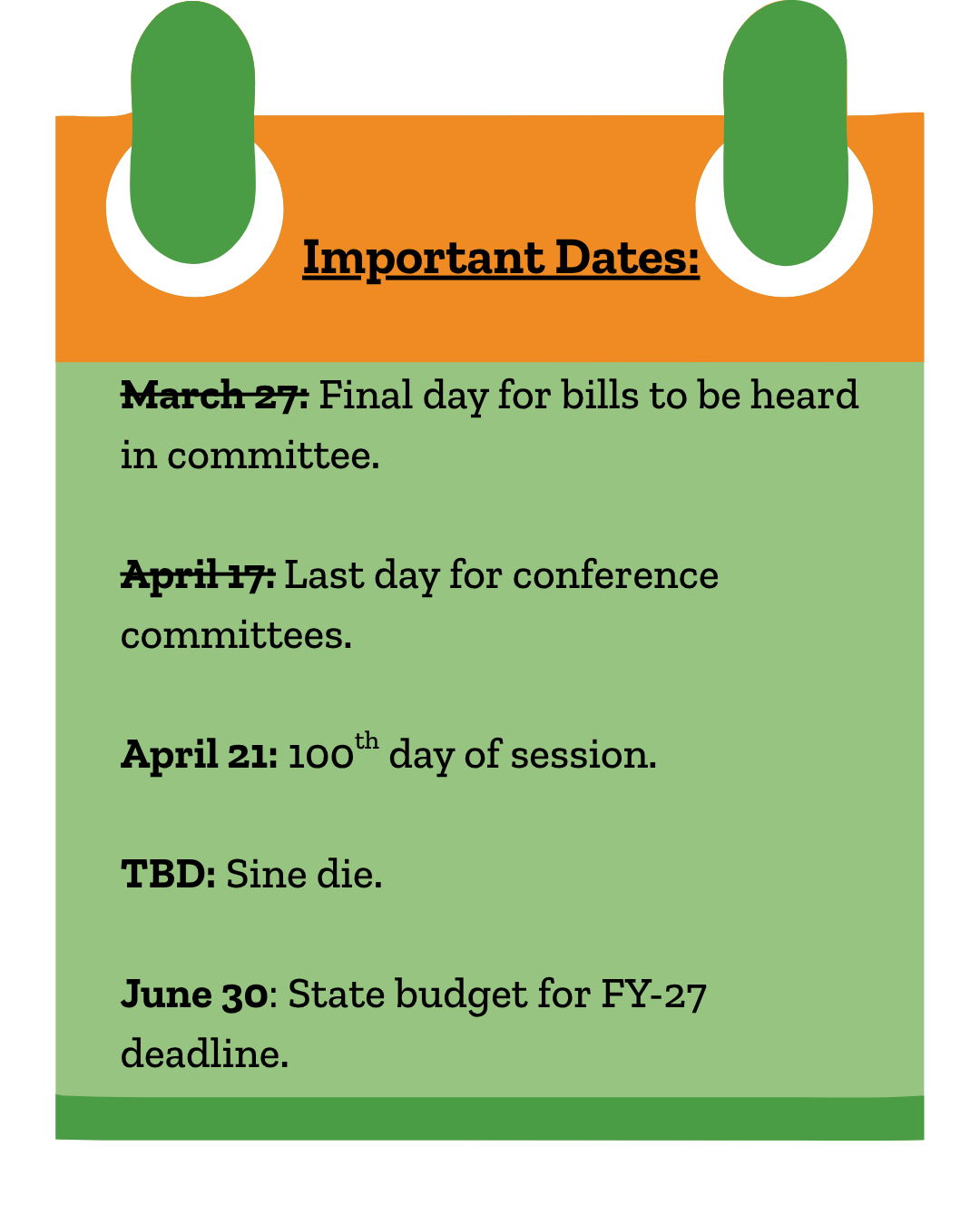
Last week we cruised past April 21, 2026, which was the 100th day of the state legislative session and known as April Fool’s Day: Part Two in this crowd. We’re rapidly approaching the time when budget negotiations become real, and folks find out just how little the state of Arizona has in its General Fund. Paired with the fact that it’s an election year, we can assume the next month will be busy with lawmakers attempting to wrap up work on bills to be able to point their focus toward the budget.
In recent years, it’s felt like a house of cards trying to meet the June 30 deadline to pass a state budget, and this year there’s the extra stress on everyone, including the governor, needing to get out on the campaign trail.
There is still time to take action on HB2728, which we covered in last month’s newsletter. Please consider using the Request to Speak system or contacting your state senator in respectful opposition to the Bliss Amendment added to HB2728.

Krupp’s Corner: An Update on SNAP & AHCCCS
By now, most Arizonans working in food security have seen the headlines: Arizona leads the nation in SNAP enrollment decline, having shed over half its caseload—more than 450,000 recipients, including nearly 200,000 children—since H.R. 1 took effect last July.
But tracking the full picture of food and health security means seeing more signs that the SNAP crisis may be just the beginning. People losing food assistance and those at risk of losing Medicaid coverage are not two separate groups—78 percent of people participating in SNAP are covered by Medicaid, and 20 percent of Medicaid recipients are SNAP participants. Research shows that SNAP and Medicaid enrollment move together, and the barriers that cause someone to lose eligibility for one program don’t operate in a vacuum. With the expansion of SNAP work requirements, and the first ever federally mandated instance of work requirements for Medicaid, this dual loss of food help and health care is only expected to grow.
Arizona's Medicaid program, called the Arizona Health Care Cost Containment System (AHCCCS, pronounced “access”) serves about 1.9 million Arizonans and has already seen a nearly 20 percent decline from the previous year. This is despite the fact that new community engagement regulations (like work, school, volunteering, or training) don't take effect until January 1, 2027. This signals that staffing shortfalls, increased documentation burdens from policy changes, and the friction of more frequent eligibility verification are eroding coverage for AHCCCS now.
What happens next, both in the short and longer term, will depend significantly on decisions made at the state level. Under H.R. 1, states retain meaningful discretion in how they implement Medicaid work requirements. This includes how much funding they dedicate to outreach, exemption determinations structure, and whether they invest state dollars to offset federal administrative cuts.
The November 2026 state general elections (and the July primary elections that will determine which candidates are run in November) will shape this implementation environment in important ways. This includes how the legislative and executive branch prioritize low-income households’ access to food, healthcare, and other basic needs, along with how the state will allocate revenue from our taxes at a moment when federal support is shrinking.
We've had many moments this year that have been unprecedented, but it's hard to convey how much is riding on decisions made now, and how these determinations will impact the health and food security of hundreds of thousands of our neighbors for years to come.
With so much riding on this election, it will be more important than ever to vote to end hunger and encourage others to do the same. If you are looking for more information about how to register to vote, check out our flyer in English or Spanish. For details on candidates, debates, and more, be on the lookout for upcoming details from AzFBN!
Farm Bill 2026 Update: Policy choices (the struggle is real)
The House 2026 Farm Bill (Farm, Food, and National Security Act, or H.R. 7567) is moving quickly through the U.S. House of Representatives, with Republican leadership announcing plans to bring the omnibus package to a Floor vote later this week. Luckily, some of the AzFBN advocacy team and fellow anti-hunger advocates are in Washington, D.C., right now, talking with Members of Congress and staffers.
While the bill includes support for farmers, it fails to protect millions of families who rely on SNAP to put food on the table. Most notably, it does not delay the SNAP deadlines still to come from H.R. 1, which would give states a runway to implement these shifts and help prevent eligible families from losing benefits (see above).
If the House passes a Farm Bill that advances farm support, but fails to undo some of the dangerous changes made to SNAP in HR 1, it will seriously undermine efforts to secure a bipartisan bill later this year—one that supports both farmers and families struggling with food costs.
The decisions made in the coming days will shape whether there is a real opportunity this year to delay the SNAP cost shift for all states and prevent continued harm to food assistance programs nationwide. We recognize that farmers and producers are struggling due to rising costs and unpredictable markets, and our food system cannot survive without its backbone, which is truly the people that grow our food. It’s a delicate situation, and one that is becoming all too common for advocates – what is the balance that will strengthen daily life for most Americans?
For example, H.R. 7567 has some strong programming in the current version. It establishes a home-delivery pilot program for the Commodity Supplemental Nutrition Program (CSFP, or senior food boxes) and creates a program to strengthen connections between local producers and community food programs (similar to the Local Food Purchase Assistance Cooperative Agreement Program, or LFPA). These are very good things! But at the same time, it doesn’t expand the Emergency Food Assistance Program (TEFAP, or emergency food boxes) or the funding needed to administer it. And this is crucial – when fewer people qualify for SNAP, they turn to food banks, and food banks need support to meet this rising demand.