New Resource: Prayers and Resources for Congregations in Public Life
As Arizona congregations prepare for another election season, many leaders are asking faithful and practical questions: What is the church’s role in public life? How do we pray in anxious times? How can congregations encourage civic participation without becoming partisan? How do worship, advocacy, and love of neighbor belong together?
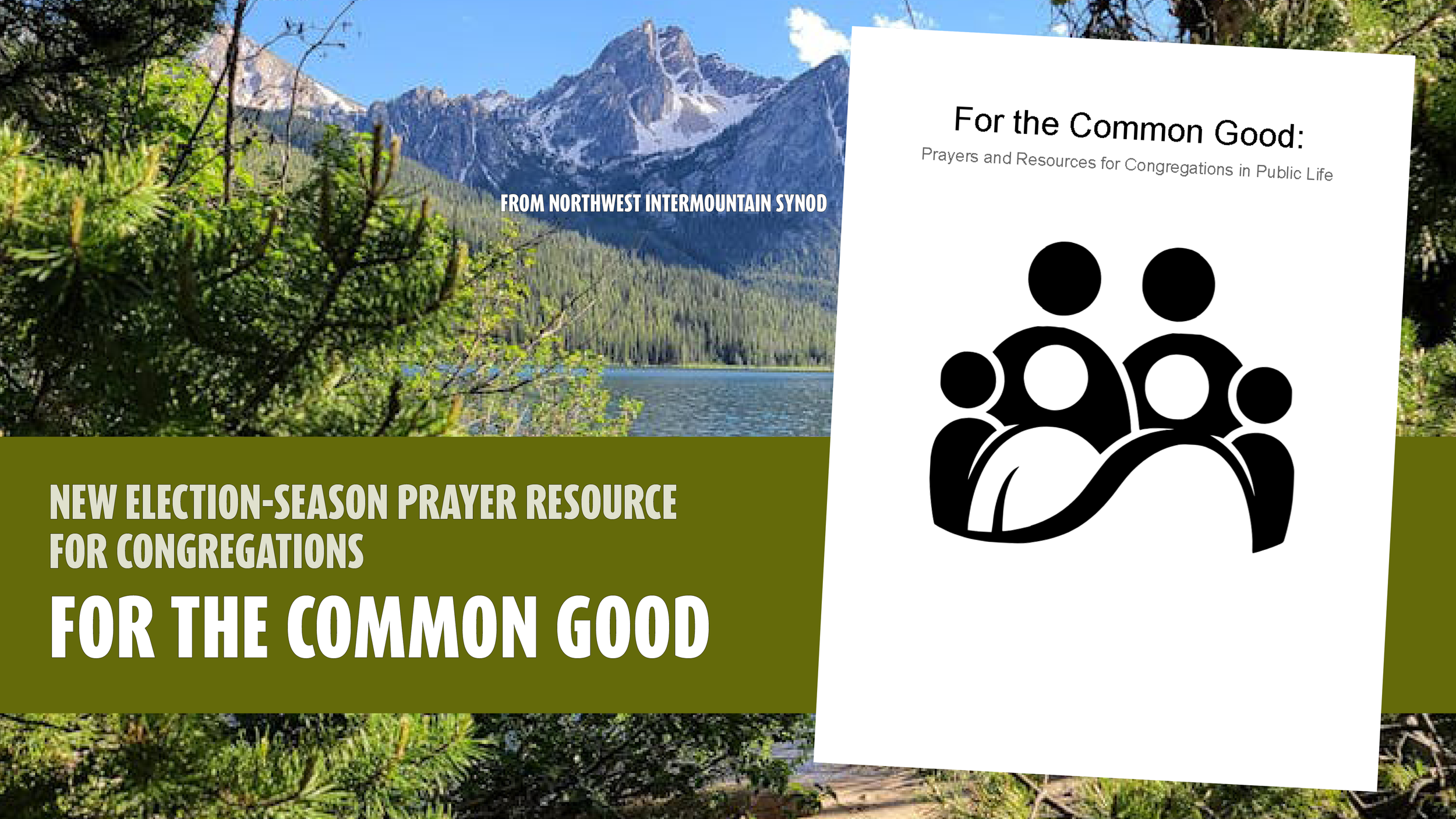
A new resource from the Northwest Intermountain Synod, titled “For the Common Good: Prayers and Resources for Congregations in Public Life,” offers a thoughtful and deeply Lutheran response.
Developed as the Northwest Intermountain Synod prepared for the Fall 2026 elections, the resource grew out of conversations among synod leaders, cluster deans, Synod Council members, and a Prayer and Presence in Public Life Task Force. In her introduction, Bishop Meggan Manlove names the central question clearly: as communities prepare for elections, what is the church’s role?
The answer offered throughout the resource is not partisanship. It is prayer, worship, faithful presence, civic engagement, and commitment to the common good.
The document grounds public life in Lutheran theology. It reminds us that through baptism and Holy Communion, we are shaped by God’s grace not to live for ourselves alone, but for the sake of community and the world. Each person bears the image of God and is worthy of dignity and respect — a conviction that extends beyond the sanctuary into the “table of conversation, decision, and listening” in civic life.
The resource also reminds us that the ELCA itself is democratic in nature. Congregations send representatives to synod assemblies, synods send representatives to Churchwide Assembly, and the church’s public positions are formed through deliberation, voting, resolutions, and memorials. Civic participation is not foreign to Lutheran life; it reflects patterns of shared responsibility already present in our church.
One of the strongest parts of the resource is its connection between worship and civic life. Drawing on the ELCA social statement Faith and Civic Life: Seeking the Well-being of All, the resource notes that congregations are centers for civic participation because worship itself prepares us to be sent into the world for the community’s good.
For congregations looking for practical tools, the resource includes suggested hymns from Evangelical Lutheran Worship and All Creation Sings, ideas for praying for election officials by name, guidance for prayer services or vigils, and suggested bids for the Prayers of Intercession. These prayers include petitions for election workers, poll workers, public officials, candidates, courts, postal carriers, voters, polling places, voter registration volunteers, public trust, peace, nonviolence, and free and fair elections.
That makes the resource especially useful for Arizona congregations. In our state, election seasons often bring anxiety, misinformation, distrust, and deep disagreement. Congregations may not agree on every candidate, party, or policy. But we can pray together for truth, safety, humility, courage, and the well-being of all. We can encourage nonpartisan voter participation, support election workers and public servants, help neighbors seek reliable information, and model public life rooted in dignity rather than contempt.
The resource closes with a quote from Parker Palmer about the need for both “chutzpah” and humility in democratic life: the courage to speak clearly and the humility to listen openly. That combination feels especially important now. Faithful civic engagement asks us to use our voices, but also to remember that our own perspective is partial and that our neighbors’ experiences matter too.
LAMA commends this resource to pastors, deacons, worship planners, advocacy teams, adult forums, church councils, and anyone wondering how to pray and lead faithfully in election season. It offers language and practices that are grounded, nonpartisan, pastoral, and deeply connected to our Lutheran call to seek the well-being of all.
As we move through this season, may our congregations be places of prayer, courage, humility, truthful speech, and faithful public witness — for the common good.