New ELCA Election Engagement Toolkit Helps Congregations Put Faith Into Action
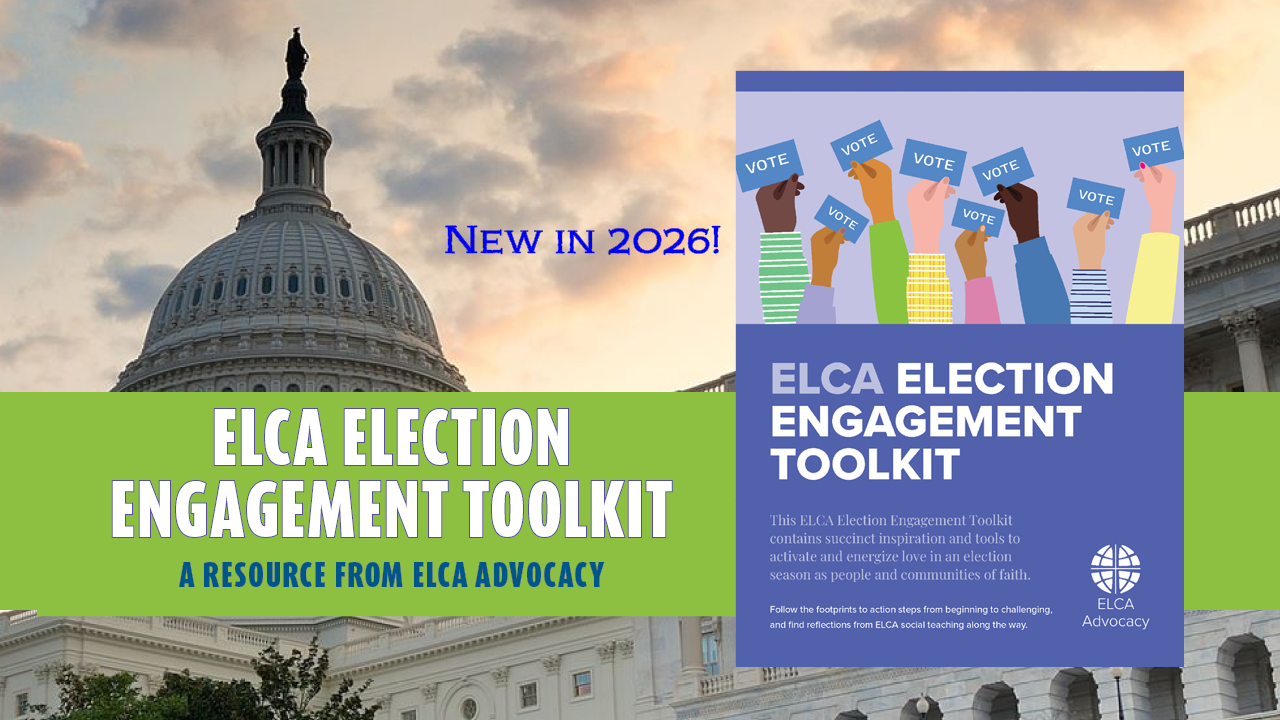
Voting is one way people of faith care for their neighbors and seek the common good—and a new ELCA toolkit offers congregations practical, nonpartisan ways to encourage participation, protect access to the ballot and bring a faithful presence to election season.
The new ELCA Election Engagement Toolkit is designed for congregations, ministry leaders and individuals who want to participate in the electoral process but may not know where to begin. Rather than telling people how to vote, the 20-page guide helps Lutherans encourage informed participation, reduce barriers and strengthen trust in the election process.
The toolkit is grounded in the ELCA social statement Faith and Civic Life: Seeking the Well-being of All, which calls Lutherans “to pray, participate in, and advocate for civic life in the United States.” It also emphasizes that every activity undertaken by a congregation or rostered minister must be transparent, legal and strictly nonpartisan.
Start Where You Are
One of the toolkit’s most helpful features is its tiered approach. Each section offers actions at three levels: Beginning, Ready for More and Challenging. A congregation can choose a simple first step or build toward deeper community engagement.
The toolkit includes guidance for:
Beginning conversations about faith, voting and the common good.
Helping people check their voter registration and make a voting plan.
Hosting nonpartisan voter-registration and get-out-the-vote activities.
Providing transportation, childcare or other Election Day support.
Recruiting poll workers, poll observers and poll chaplains.
Offering a congregation’s building as a polling location.
Sharing trustworthy information and responding to misinformation.
Supporting election protection and de-escalation efforts.
Holding prayer vigils and other forms of faithful public witness.
The guide also points readers to Bible studies, conversation starters, worship materials, legal guidance and resources for discussing political differences without losing sight of our shared responsibility to love and serve our neighbors.
Practical Ideas for Arizona Congregations
Many of the suggested activities can be adapted easily for Arizona congregations. A church might post a “Prepared to Vote Checklist,” help members verify their registration, share accurate information from state and county election officials, or offer rides to a voting location.
Congregations with food pantries, shelters and community ministries can share voting information with neighbors who may face additional barriers, including people experiencing homelessness, older adults, people with disabilities and residents of rural or Tribal communities.
The toolkit also highlights poll chaplains—trained clergy and lay leaders who offer a calm, nonpartisan presence at voting locations. Arizona Faith Network and its partners have been preparing poll chaplains and peacekeepers to help protect vulnerable voters, reduce tension and support safe, welcoming elections.
LAMA is honored to be represented in the national resource as well. A photograph and reflection from a LAMA election volunteer illustrate how simple hospitality—welcoming voters, offering snacks and supporting election workers—can help a congregation build relationships with its wider community.
Trusted Messengers in Confusing Times
The toolkit gives special attention to misinformation and disinformation. Congregations and faith leaders are often trusted sources within their communities, which gives them an important responsibility to verify what they share and direct voters to reliable election information.
That can be as simple as communicating the correct election date, registration deadline, identification requirements and polling locations. It can also mean building relationships with local election officials so church leaders can respond to questions with accurate, firsthand information.
As the toolkit reminds us, healthy civic engagement requires clear distinctions between facts, mistakes and intentional falsehoods—and asks us to consider whether the information we repeat represents the best possible understanding of our neighbor.
Faithful, Not Partisan
Election engagement is not candidate endorsement. ELCA congregations may encourage voting, provide nonpartisan education, host appropriately structured candidate forums and advocate for fair access to the ballot. They may not use church resources to support or oppose a candidate or political party.
The toolkit directs congregations to the ELCA resource Being a Public Church in the Electoral Process: A Guide for Churches and Rostered Ministers for additional guidance about permissible and prohibited election activities.
Our faith does not give all Lutherans the same political opinions. It does give us a shared calling to seek the well-being of our neighbors, tell the truth, protect human dignity and participate constructively in our common life.
What’s one step your congregation can take this election season?