New Hunger Data Shows Arizona Still Has Work to Do
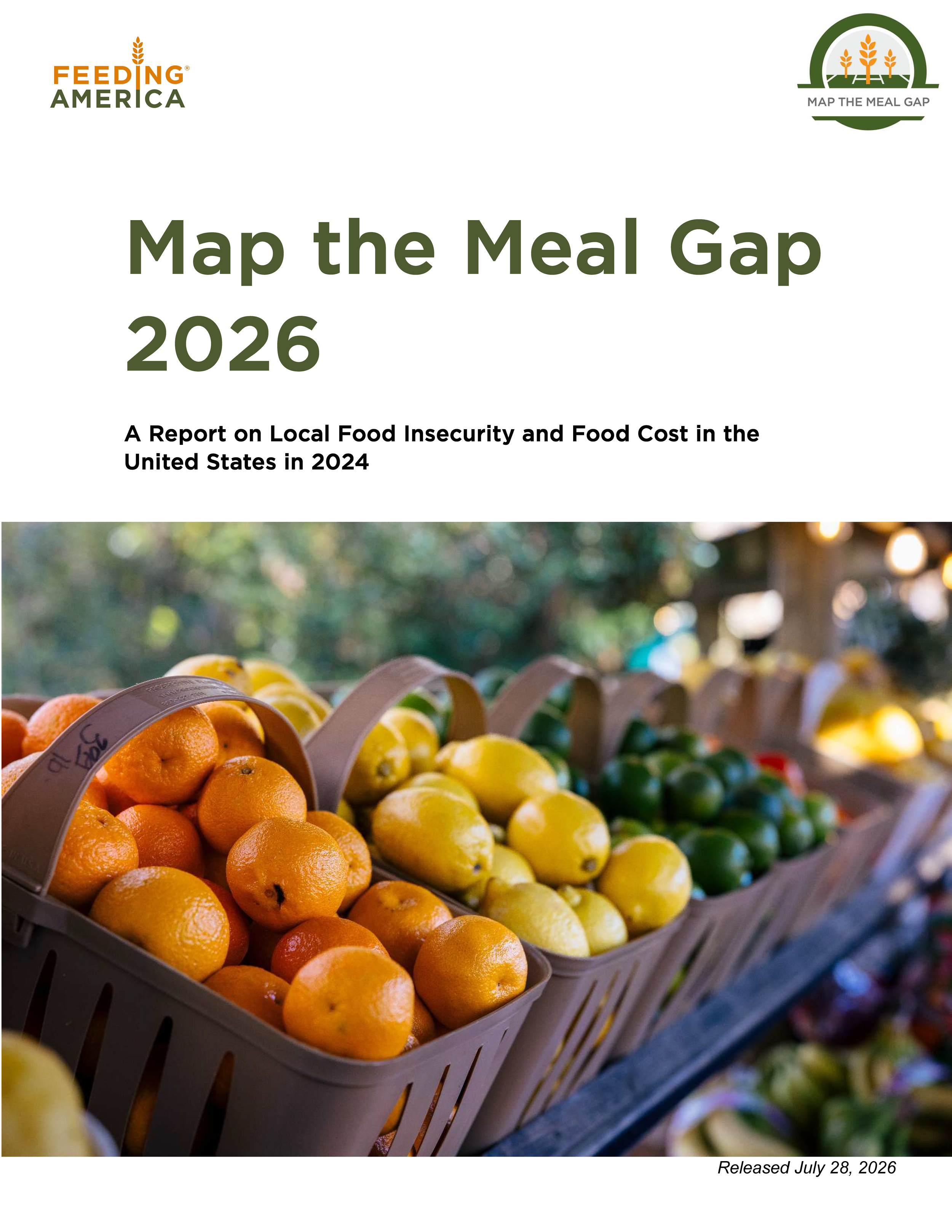
New data from Feeding America’s Map the Meal Gap 2026 report confirms what Arizona food banks, congregations, schools, and community ministries already know: hunger is still present in every community, and families are struggling with the high cost of food and other basic needs.
The report defines food insecurity as limited or uncertain access to adequate food. It is not simply about whether a family skipped a meal today. It reflects the pressure of income instability, high grocery prices, housing costs, health care expenses, utilities, child care, transportation, and limited access to community resources. Feeding America’s 2026 report uses the most recent federal data available through 2024 to estimate food insecurity at the county and congressional-district level.
For Arizona, the numbers are sobering. According to the Arizona Food Bank Network’s summary of recent Map the Meal Gap data, approximately 1,067,120 Arizonans — 14.4% of the state — are food insecure, including 291,290 children, or 18.4% of Arizona children. Put simply: more than 1 in 8 Arizonans and nearly 1 in 5 children are struggling to reliably access enough nutritious food.
That has serious implications for LAMA’s advocacy. Hunger is not just a charity issue. It is a public-policy issue, a family-stability issue, a children’s health issue, and a faith issue. Feeding America notes that food insecurity is linked to health outcomes, chronic disease, child development, academic performance, military readiness, and work productivity. When hunger persists, the whole community is affected.
The report also highlights an important reality for Arizona: many people who are food insecure may not qualify for SNAP. Nationally, Feeding America estimates that nearly half of all people experiencing food insecurity have incomes too high to qualify for SNAP. That means food banks and congregational hunger ministries remain essential, especially for working families whose wages are too high for some programs but too low to meet the real cost of living.
At the same time, SNAP remains the nation’s most important anti-hunger program. Feeding America calls SNAP the “first line of defense against food insecurity.” This matters in Arizona, where recent SNAP participation declines and new federal cost shifts could leave more families without the support they need. Food banks can help fill gaps, but they cannot replace the scale of federal nutrition assistance.
The timing is especially concerning. Feeding America warns that economic conditions in 2025 and 2026 are likely to keep food insecurity high, with unemployment edging up, food prices rising, and food banks facing greater demand, funding cuts, higher fuel costs, and uncertainty. Arizona families are living that pressure every day.
The report also raises a data concern. USDA has discontinued the Current Population Survey Food Security Supplement beginning in 2025, meaning official national and state-level food security data may no longer be available in the same way. For advocates, that matters. We cannot respond faithfully to hunger we do not measure. Reliable data helps lawmakers, food banks, schools, congregations, and public agencies understand where need is rising and where resources should go.
For LAMA, the implications are clear.
Arizona must continue investing in hunger relief, including food bank capacity, SUN Bucks, school meals, Double Up Food Bucks, and programs that help families access fresh and healthy food. State investments matter, but they must be paired with strong federal policy that protects SNAP, reduces administrative barriers, and ensures eligible families can receive help without being pushed off by paperwork, confusion, or lack of access.
Congregations also have a role. We can support food pantries, collect food, host community meals, volunteer with local food banks, and help families learn about available resources. But we can also advocate. We can ask lawmakers to protect SNAP, support school and summer meals, strengthen rural food access, invest in transportation and local food infrastructure, and address the housing, health care, and wage pressures that drive hunger.
Lutherans believe every neighbor deserves enough to eat. The ELCA social statement Sufficient, Sustainable Livelihood for All reminds us that “we do not eat alone; everyone needs to eat.” Feeding America’s new data gives us a clearer picture of the need before us. Now people of faith must respond — with charity, yes, but also with public witness for policies that help every Arizona neighbor thrive.