The Declaration of Independence: A Lutheran Perspective
The Declaration of Independence: A Lutheran Legacy of Gratitude, Humility, and Public Responsibility
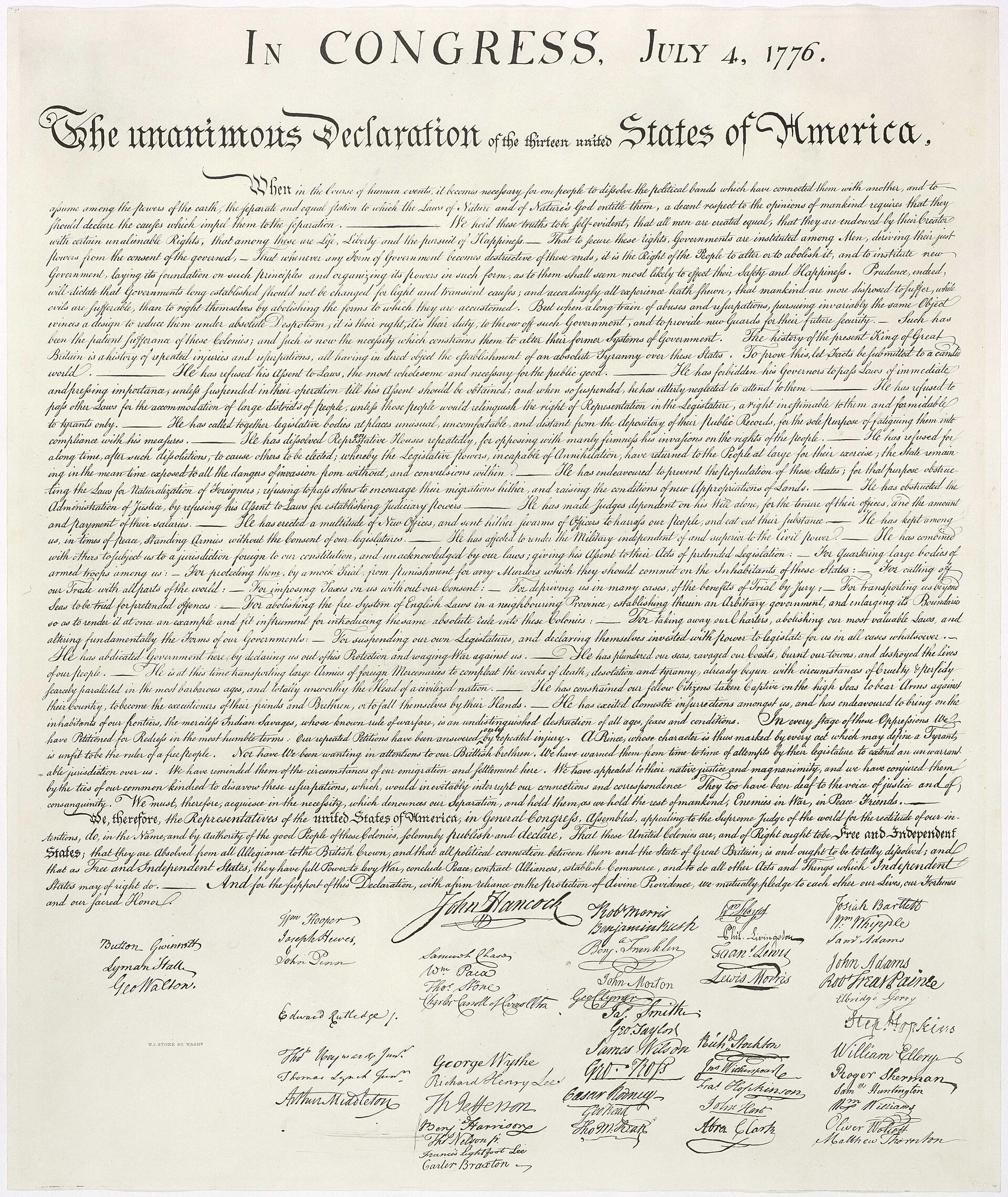
When the Declaration of Independence was signed in 1776, Lutherans in North America likely did not all hear it the same way. Some German-speaking Lutheran colonists, especially in Pennsylvania and the Mid-Atlantic, would have heard in the Declaration a bold claim against tyranny and a hopeful vision of self-government. Others may have been cautious, conflicted, or even loyal to the Crown, shaped by Lutheran concern for order, authority, and the dangers of rebellion.
That complexity is part of our Lutheran inheritance. Lutherans have long taught respect for civil authority, but not blind obedience to injustice. Government is understood as one way God works in the world to protect life, restrain harm, seek justice, and serve the neighbor. When government fails in those purposes, Christians must ask hard questions about conscience, public responsibility, and the common good.
Colonial Lutherans embodied that tension. The Muhlenberg family alone shows how complex the moment was: Henry Melchior Muhlenberg, often remembered as the patriarch of American Lutheranism, served immigrant Lutheran communities with pastoral care and caution during a time of political upheaval, while his son Peter Muhlenberg became a Revolutionary War general and later served in public office. Their story reminds us that Lutherans have never had only one simple way to think about faith and nation.
Today, ELCA Lutherans can receive the Declaration of Independence with both gratitude and humility. We can be grateful for its soaring language about equality, rights, consent of the governed, and resistance to tyranny. Those ideals have inspired generations of people seeking freedom and fuller participation in civic life. At the same time, we must tell the truth: the promises of the Declaration were not extended equally in 1776. Enslaved people, Indigenous peoples, women, and many others were excluded from the freedom the document proclaimed.
Presiding Bishop Yehiel Curry has invited the ELCA to hold this anniversary with both celebration and confession. The Declaration, he notes, proclaims a vision of equality, and we can be grateful for that vision. Yet with “contrition and humility,” we also acknowledge the many ways our nation has failed to embody it. That is a deeply Lutheran posture: naming both gift and sin, promise and failure, aspiration and repentance.
The ELCA’s social teaching gives us language for this work. Faith and Civic Life: Seeking the Well-being of All calls Lutherans to “pray, participate in, and advocate for civic life” that reflects God’s call toward the well-being of all people and a creation marked by justice and peace. It also reminds us that civic engagement is not optional for people of faith. Our baptismal vocation sends us into the world to serve the neighbor, seek justice, and participate in public life for the common good.
The Declaration’s legacy for Lutherans today is not national self-congratulation. Nor is it cynicism. Its legacy is a call to faithful public responsibility. We can honor the Declaration best not by pretending its promises were fulfilled from the beginning, but by working so those promises are more fully realized now: in voting rights, racial justice, Indigenous justice, immigrant welcome, hunger relief, health care access, housing, education, care for creation, and dignity for every neighbor.
For LAMA, this matters because advocacy is one way Lutherans live out love of neighbor in public. We do not confuse the United States with the reign of God. We do not worship nation, flag, party, or ideology. But we do believe that civic life matters, because our neighbors’ lives are shaped by public decisions.
The Declaration of Independence is part of our nation’s story. Lutheran faith gives us a way to read that story honestly: with gratitude for real gifts, repentance for real harms, and courage to continue the unfinished work of justice. As ELCA Lutherans, we can mark this anniversary by asking not only what the Declaration meant in 1776, but what love of neighbor requires of us in 2026.
Additional grounding: The National Archives describes the Declaration as expressing the ideals on which the United States was founded, while noting that it is not legally binding but remains powerful; ELCA’s 2026 worship resources for the U.S. Semiquincentennial say congregations may need to both celebrate and lament national history and avoid conflating church and country. Historical grounding on Lutheran complexity comes from sources on Henry Melchior Muhlenberg and Peter Muhlenberg, including the National Park Service and the U.S. House history profile of John Peter Gabriel Muhlenberg.