The government shutdown is over. What comes next?
Reprinted from Arizona Food Bank Network Inside Scoop, Nov. 26, 2025.
The longest federal government shutdown in American history is over, and SNAP benefits are restored, but what comes next? The good news is that SNAP and WIC are fully funded through September 2026. The bad news is that the funding package Congress passed only funds the government through January 30, 2026. Which means that while we won’t see a suspension of SNAP or other federal nutrition programs again, Congress must agree on funding for other agencies to avoid another shutdown early in the new year.
The main areas of concern are still Affordable Care Act (ACA) tax subsidies. These subsidies expire at the end of December and, if not extended, are estimated to increase monthly health insurance premiums by an average of 114 percent for 22 million Americans. Reports indicate that if ACA subsidies are extended, however, premium adjustments can likely be reduced by insurance companies before the increases go into effect.
Larger policy changes are also being discussed—including altering ACA contribution amounts or sending direct payments to individuals through Health Savings Accounts (HSAs)—that states and insurers may not be able to implement before 2026 price changes take effect. Beyond the ACA, Homeland Security, energy spending, and other priorities are expected to be major negotiating points in the months ahead.
What’s Happening with the US Healthcare System?
You may be asking yourself: I thought this was a SNAP and food insecurity newsletter... Why are we talking about healthcare so much? Well, SNAP and the US healthcare system, specifically Medicaid—or the Arizona Health Care Cost Containment System (AHCCCS)—are intertwined for millions of Americans.
It is currently estimated that 12 million households or roughly 30 million people are enrolled in both SNAP and Medicaid programs.
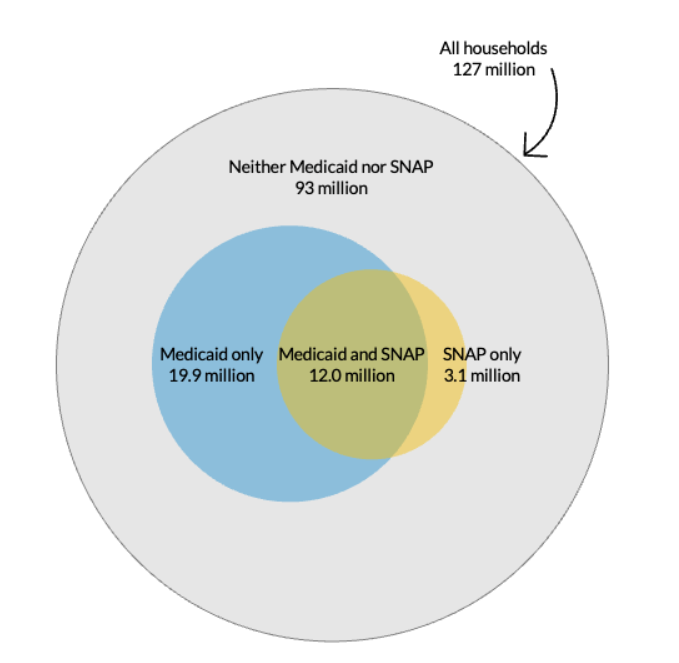
Graph depicts household participation.
Schwabish, J. (2025, July 28). About 12 Million Households Receive Both Medicaid and SNAP. The Reconciliation Bill Puts Them At Risk. Urban Institute. https://www.urban.org/urban-wire/about-12-million-households-receive-both-medicaid-and-snap-reconciliation-bill-puts-them
Although we know SNAP is going through significant changes, Medicaid is similarly being impacted by H.R. 1 (One Big Beautiful Bill Act, or OBBA), which went into law in July. (For a refresher on the SNAP changes, here is the SNAP 101 webinar Jessica hosted earlier this year (Password: 8g&+3nbv)).
While there are too many updates to outline in this newsletter, I shared an overview of upcoming changes to Medicaid in the SNAP 201 webinar linked here (password: 7rMda+HW).
To briefly summarize, many of the changes we are seeing to SNAP, such as work requirements and eligibility changes, are similarly being applied to Medicaid and begin to go into effect December 31, 2026. Over the coming months, we will share relevant information about AHCCCS (pronounced “access”) and how it could impact SNAPparticipants and low-income Arizonans.