
Why Arizona’s Corporation Commission Matters
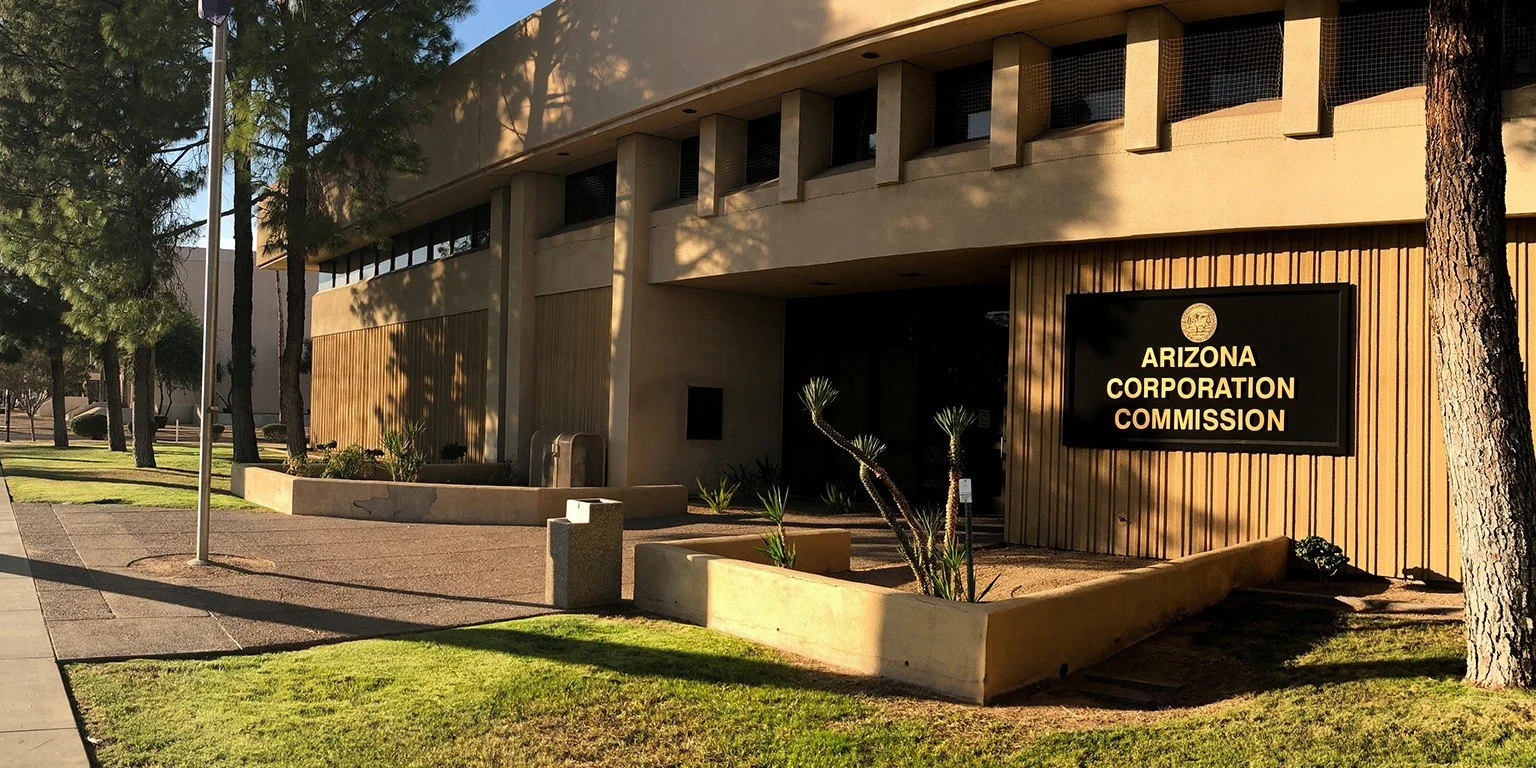
Most Arizonans know who is running for governor, Congress, or the Legislature. Fewer people pay close attention to the Arizona Corporation Commission — even though its decisions can affect monthly utility bills, water service, rooftop solar, energy reliability, extreme-heat protections, business filings, railroad and pipeline safety, and consumer protection.
The Arizona Corporation Commission is a five-member elected body with broad regulatory authority. Commissioners oversee many public utilities, including electric, natural gas, water, wastewater, and telephone companies. They help set utility rates, approve or reject rate increases, decide rules for energy and water infrastructure, regulate securities, register corporations and limited liability companies, and help enforce railroad and pipeline safety.
In other words: this is one of the most important offices on the ballot that many voters know the least about.
Why are Corporation Commissioners elected?
Arizona is unusual. In many states, utility regulators are appointed. In Arizona, voters elect Corporation Commissioners to four-year terms. The commission was created in the Arizona Constitution as an independent body, separate from the Legislature, governor, and courts. The purpose was to balance the power of large corporations — railroads in the early 20th century, and today utilities and other regulated industries — with the needs of ordinary residents.
That history matters. The commission is not just a technical board. It is a public-interest body. Its job requires commissioners to weigh evidence, hear from utilities and consumers, follow the law, and make decisions that affect household budgets, community health, business development, and Arizona’s future.
How does the Commission affect everyday life?
The Corporation Commission’s work shows up in very practical ways:
It affects how much many Arizonans pay for electricity, gas, water, and sewer service.
It affects whether utilities can disconnect power during dangerous heat.
It affects how utilities plan for population growth, data centers, wildfire risk, drought, and grid reliability.
It affects rooftop solar customers and how they are credited or charged.
It affects whether utilities invest in renewable energy, energy efficiency, natural gas, nuclear power, transmission lines, and other infrastructure.
It affects rural communities where water access, wastewater systems, and small utilities can be fragile.
It affects consumers and small businesses through securities enforcement and business registration.
One important note: the Corporation Commission does not regulate every utility in Arizona. For example, Salt River Project has its own elected governing board and is not regulated by the Corporation Commission in the same way that APS, Tucson Electric Power, UNS Electric, and many water and wastewater utilities are. Still, for millions of Arizonans, the Commission’s decisions are close to home.
What skills are needed for the job?
A good Corporation Commissioner does not need to be an engineer, attorney, economist, or utility expert — but the job requires a willingness to learn complex material and make careful, evidence-based decisions.
Helpful skills include:
understanding utility rates and household affordability
asking strong technical questions
reading legal and financial documents
listening to consumers, utilities, experts, and community advocates
understanding energy reliability, water systems, infrastructure, and climate realities
protecting consumers from fraud and abuse
weighing short-term costs against long-term public needs
communicating decisions clearly
avoiding conflicts of interest and undue influence
remembering that public service is about the common good
For people of faith, the moral questions are clear: Who bears the cost? Who benefits? Who is protected? Who is left out? How do decisions affect children, seniors, low-income families, rural communities, people with disabilities, and neighbors most vulnerable to extreme heat?
Important decisions in recent years
Over the past decade, the Corporation Commission has made major decisions that continue to shape Arizona.
In 2016, the Commission moved away from traditional net metering for rooftop solar, changing how solar customers are credited for the excess power they send back to the grid. That decision continues to affect solar adoption, customer bills, and debates about fairness between solar and non-solar customers.
In 2018, after serious problems with Johnson Utilities in parts of Queen Creek, San Tan Valley, and Florence, the Commission appointed EPCOR as interim manager of the water and wastewater systems. That case showed how important utility oversight can be when water and wastewater service fails.
In 2019 and 2021, following public concern over power shutoffs during extreme heat, the Commission strengthened utility disconnection protections. Today, regulated electric utilities must follow extreme-weather shutoff policies, and summer protections remain a life-and-death issue in Arizona.
In 2022, the Commission rejected a major clean-energy rules package that would have set a path toward 100% carbon-free electricity and expanded energy efficiency requirements. Supporters argued the rules would reduce bills and support clean-energy investment; opponents raised concerns about cost and mandates.
In 2024, the Commission approved a rate increase for Arizona Public Service customers, with an estimated impact of about 8%, or roughly $10–$12 per month for a typical residential customer. The decision also included an additional grid access charge for residential solar customers.
In 2026, the Commission voted to repeal Arizona’s Renewable Energy Standard and Tariff (REST) rules, which had been adopted in 2006 and required regulated electric utilities to generate a percentage of their energy from renewable resources. Commissioners who supported repeal argued the mandates were no longer needed and had imposed costs on ratepayers; critics argued that renewable standards helped Arizona move toward cleaner energy and long-term affordability.
These decisions show why Corporation Commission races matter. The Commission is where energy affordability, reliability, water access, consumer protection, climate, and public accountability often meet.
Who is running in 2026?
In 2026, two of the five Corporation Commission seats are up for election. As of this writing, the general election candidates are:
Kevin Thompson, Republican, incumbent
Ralph Heap, Republican
Clara Pratte, Democrat
Jonathon Hill, Democrat
Mike Cease, Green Party
Voters should confirm the final candidate list through official election sources and review each candidate’s own materials before voting.
How can voters learn more?
LAMA does not endorse candidates. But we strongly encourage faithful civic engagement. Before voting for Corporation Commission, consider:
Read candidate statements through Arizona Citizens Clean Elections.
Watch Clean Elections debates or forums when available.
Visit candidate websites.
Review news coverage of rate cases, energy policy, and utility issues.
Look at the Commission’s open meeting agendas and recent decisions.
Ask candidates how they would balance affordability, reliability, consumer protection, water security, rural needs, and care for creation.
Ask how they would protect vulnerable customers during extreme heat.
Ask how they would ensure utilities, large energy users, and ratepayers each pay their fair share.
Questions for faithful voters
As Arizona Lutherans prepare to vote, we might ask:
How will this candidate protect households struggling with utility bills?
How will this candidate respond to extreme heat and the need for safe, reliable power?
How will this candidate think about water, especially in rural and fast-growing communities?
How will this candidate weigh energy affordability with long-term care for creation?
How will this candidate protect consumers and small businesses from fraud?
How will this candidate make decisions transparently and resist special-interest pressure?
The Corporation Commission may not be the most visible office on the ballot, but it is one of the places where public policy becomes very personal. Utility bills, shutoff protections, water service, solar policy, business regulation, and energy planning all affect the well-being of our neighbors.
For LAMA advocates, this is exactly where faith and civic life meet: paying attention to decisions that shape daily life, asking good questions, and voting with love of neighbor in mind.